
In a significant verdict, the Supreme Court by a majority of 7:2 on Tuesday held all private properties cannot form part of "material resources of the community" empowering states to take them over for distribution to serve "common good" under the Constitution.

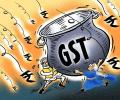
GST collections in July rose 10.3 per cent to over Rs 1.82 lakh crore, mainly driven by domestic transactions in goods and services, according to official data released on Thursday. This is the third-highest-ever monthly collection recorded since the indirect tax regime was rolled out 7 years ago on July 1, 2017. According to the data, total refunds stood at Rs 16,283 crore in July.

Hybrids have helped Maruti acquire leadership in SUVs, a segment that was never its forte. Toyota has also risen with the hybrid tide to clock its highest-ever annual sales in 2023.

In her Budget speech, Finance Minister Nirmala Sitharaman on Tuesday underlined the need for collaboration between the Centre and states to take up the next-generation reforms covering land, labour, capital and entrepreneurship. As far as revenue share goes, the government has projected to give about 32.5 per cent of central taxes to states during FY25, against the 15th Finance Commission's recommendation of 41 per cent, according to the Union Budget estimate.
This was discussed at a meeting chaired by the Prime Minister's Principal Secretary, TKA Nair, on January 12 with the Indian Bank Association, industry bodies and human resource development ministry officials.
The Confederation of Indian Industry on Monday proposed a 5 per cent cess to develop railway infrastructure and exuded confidence that 7-8 per cent GDP growth was achievable in the next decade.

Maruti Suzuki India (MSIL) will hold discussions with the Centre and state governments on how the production of compressed biogas (CBG), which can be used in vehicles that run on compressed natural gas (CNG), can be expanded in the country, its majority shareholder Suzuki Motor Corporation (SMC) said. The demand for CNG vehicles has been rising significantly in the country. MSIL sold 145,000 CNG vehicles in the first quarter of 2024-25, marking a 28.3 per cent year-on-year (Y-o-Y) growth.

'If you invest in sovereign gold bond, you are going to get the price rise of gold over an eight year period.' 'You're also going to get that two-and-a-half percent which the Government of India is willing to give you, treating the money that you've invested in the sovereign gold bond as a kind of a FD or a deposit.' 'That kind of return you can never get anywhere else.'
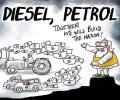
The government on Friday slapped an export tax on petrol, diesel and jet fuel (ATF) while also joining nations like the UK in imposing a windfall tax on crude oil produced locally. A Rs 6 per litre tax on export of petrol and ATF and Rs 13 per litre tax on export of diesel is effective from July 1, finance ministry notifications showed. Additionally, a Rs 23,250 per tonne tax was levied on crude oil produced domestically.

In the case of double-income couples, not more than 40 per cent of the net income of one partner should be the EMI for the property.
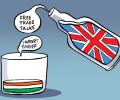
India is the UK's second-largest market by volumes for Scotch, importing the equivalent of 136 million bottles, worth £146.2 million, in 2021.
The Congress-led government's common minimum programme, whose finalisation was being expedited, will balance reforms and development so that tough measures like containing the revenue deficit and cut in subsidies become "painless".

It also sought exemption from Research and Development Cess for joint ventures implementing the offset obligations under the Defence Procurement Procedure introduced a couple of years ago to energise the defence market.

Consumers are paying an exorbitant 180 per cent tax on petrol, and 140 per cent on diesel in Delhi and in most other towns in India. Little wonder then that the central government expects a staggering Rs 3.46 trillion by levying excise duties on retail sale of the two fuels this year, and Rs 3.2 trillion the next. States would generally have had reason to cheer, as they command a 41 per cent share in Centre's tax revenues. But as the Centre has raised excise duties in the form of "cess," the revenue proceeds are by nature not shareable with states.

Education sector has reasosn to cheer Budget.

The intial round of efforts did not achieve the objectives fully.

'If such a practice were feasible, every state would seek additional funds, posing a significant risk to the overall health of the economy.'

Following are comments from economists at leading financial institutions, banks and rating agencies on the interim Budget:

The government has decided to spend big on infrastructure across a wide variety of sectors to give a greater impetus to the economy which is recovering from the impact of Covid-19, Finance Minister Nirmala Sitharaman said on Monday.

A bench, comprising Chief Justice S H Kapadia and Justices K S Radhakrishnan and Swatanter Kumar, directed the companies to pay Rs 1,200 crore as the amount due for the state government.

Mobile phones and TV sets manufactured in India would become cheaper with Finance Minister Nirmala Sitharaman announcing cuts in Basic Customs Duty (BCD) on import of their components but smokers would have to pay more as the government has increased taxes.
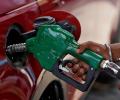
'Pump prices of petrol and diesel have reached historical highs. An unwinding of taxes on petroleum products by both the Centre and the states could ease the cost-push pressures,' the Monetary Policy Committee (MPC) has said.

The Union government is projected to share about 32 per cent of central taxes with states during the financial year 2024-25 against the 15th Finance Commission's recommendation of 41 per cent. The Revised Estimates (RE) for FY24, too, show a similar share of states in the central taxes at 32 per cent. In absolute terms, however, there has been an increase in the amount devolved to states compared to the Budget Estimates (BE) for FY24 at Rs 11 trillion.

Widening of the tax base, doing away with cess and surcharge, improvement in compliance and moderation in tax for emerging sectors are some of the suggestions submitted to the Finance Ministry ahead of the Budget by Think Change Forum (TCF). Experts are of the opinion that there is a need to grow tax revenues for the government to drive economic growth and make investments in developmental activities, TCF, the think tank said in a statement. Towards this end, poor compliance was identified as a weak link in achieving targeted collections leading to complex issues like overtaxing, complicated tax structures, rising litigation, among others.

India will grow at around 7.4 per cent in 2022-23 and continue at the same pace in the next year as well, Union Finance Minister Nirmala Sitharaman said on Friday. Sitharaman said there are risks on the external front and this is not the right time to throw caution to the wind, and also assured exporters of all the necessary support from the government as they face the headwinds. Speaking at the FE Best Bank Awards event here, Sitharaman said global agencies like IMF and the World Bank have taken cognisance of the strengths of the Indian economy by saying that it will be among the fastest growing ones in the next two years.

The government has hiked gold import duty to 15 per cent from 10.75 per cent to check the current account deficit (CAD) and rising import of the yellow metal. The duty changes came into effect on June 30. Earlier, the basic customs duty on gold was 7.5 per cent, now it will be 12.5 per cent.

Javadekar was addressing the 18th BASIC ministerial meeting on climate change here which is being attended by ministers of Brazil, China and South Africa.

Reeling under a series of derailments, the Budget is likely to announce creation of a separate safety fund of about Rs 1 lakh crore over the next five years.

'I would want people to have food on their tables and their wages to rise.' 'Will that happen or not is the question that we need to ask and answer.'
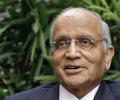
The regulatory burden is the highest on small cars, a key segment of the Indian automobile industry and having a uniform tax structure across all segments of vehicles will not augur well for the sector growth, according to Maruti Suzuki India chairman RC Bhargava. He also said India's economic growth rate could be higher if the manufacturing sector grows fast, which 'unfortunately' has remained a laggard despite the best efforts of the Narendra Modi-led government at the Centre due to implementation gaps at the ground level. "The burden of regulatory changes on the small cars is far higher than the regulatory burden on big cars and that is changing the whole market behaviour.

'I would not suggest buying these stocks in the dip, as the upside in profit is dented without a safety net for a rainy day.'

The government should scrap the windfall profit tax on domestically produced crude oil as the levy is adversely impacting the capex-intensive exploration of oil and gas, the industry said in its recommendation for the forthcoming annual Budget. India first imposed windfall profit taxes on July 1, joining a growing number of nations that tax super normal profits of energy companies. At that time, a Rs 23,250 per tonne ($40 per barrel) windfall profit tax on domestic crude production was levied.

The windfall tax on oil produced within India and fuel exported overseas will make up for more than three-fourths of the revenue that the government lost when it cut excise duty on petrol and diesel to cool soaring inflation, industry sources said. India on July 1 joined a select league of nations globally that have taxed windfall gains accruing to oil companies from soaring energy prices. The government slapped a Rs 6 per litre tax on the export of petrol and jet fuel (ATF) and Rs 13 a litre on the export of diesel effective July 1. Additionally, a Rs 23,250 per tonne tax was levied on crude oil produced domestically.

Instead of conceding the demand for a cut in personal income-tax rates, Finance Minister Nirmala Sitharaman should phase out many exemptions in both personal and corporation taxes, suggests A K Bhattacharya.

While two persons died after a portion of a `chawl' (tenement) collapsed in suburban Malvani, two others were killed after part of an old building collapsed in south Mumbai's Fort area, civic officials said.
The government intends to continue with the top GST slab of 28 per cent for luxury and sin goods, but is open to discuss narrowing down the three slabs of 5, 12 and 18 per cent into two, Revenue Secretary Tarun Bajaj said on Monday. Addressing the industry leaders, Bajaj said the rate rationalisation exercise of the GST Council is a result of introspection of GST, five years after its rollout, and the policymakers do not have a "fetish" to raise the tax rates to the revenue-neutral level of 15.5 per cent. On the industry demand for bringing petroleum products under GST net, he said since fuel constitutes a larger part of their revenues, both the Centre and states have some apprehension.

'In view of these facts I do not find it useful to attend the 7th Governing Council meeting of Niti Aayog scheduled to be held on August 7, 2022 and I am staying away from it'
 © 2026 Rediff.com - Advertise with us - Disclaimer - Privacy Policy - Sitemap - Feedback - About us - Terms of use - Grievances